






Key Takeaways
- What ITOM covers: Device management, patching, software deployment, monitoring, CMDB, and IT support. These are the operational foundations of any functioning IT environment.
- Who needs ITOM: Any company from around 30 employees onward, once manual processes and Excel spreadsheets start hitting their limits.
- What matters when choosing: Feature scope, implementation effort, ongoing operating costs, and the question of who will administer the solution internally.
- deeploi delivers core ITOM functions as an all-in-one IT solution, including device management, patching, and support, without anyone internally needing to configure tools or escalate tickets.
Which IT operations solution fits a company that has just grown large enough that Excel spreadsheets, manual onboardings, and improvised support no longer cut it? This comparison shows which ITOM solution makes sense in which situation, what each one actually delivers, and what to look out for when making your decision.
What is IT operations management (ITOM)?
IT operations management covers everything required to keep devices, networks, software, and cloud services running reliably in day-to-day work: monitoring, patching, configuration, capacity planning, and the management of all IT assets.
What is the difference between ITOM and ITSM?
Before comparing solutions, it's worth taking a clear look at the difference between ITOM and ITSM, because the two terms describe distinct areas of responsibility.
- ITSM ist das übergeordnete Framework für alle IT-Service-Aktivitäten: Es organisiert, wie IT-Leistungen an Nutzer bereitgestellt werden, von Incident- über Change- bis hin zum Problem-Management.
- ITOM ist der operative Teilbereich darunter: zuständig für Infrastruktur, Geräte, Netzwerke und den täglichen Betrieb.
The six core functions of ITOM solutions
Whether enterprise suite or lean managed platform, six core functions form the backbone of every professional ITOM solution:
{{cta}}
The best ITOM solutions compared
The ITOM market breaks down into four categories: enterprise suites, mid-market tools, cloud-native observability platforms, and incident-focused specialists. deeploi forms its own category as an all-in-one platform that bundles ITOM functions with human support as a single cohesive package.
deeploi: ITOM functions as a managed service for SMBs
deeploi is not a traditional ITOM suite but an all-in-one IT platform that delivers core ITOM functions. Device management, MDM, patch management, software deployment, IT support, and compliance enforcement come as a ready-to-use package, without an internal admin having to operate the tools themselves. The difference from a pure software license lies in the ownership model: deeploi combines automation with an expert helpdesk and takes on ongoing configuration, maintenance, and tool upkeep.

Strengths
- Central platform covering all IT areas: devices, software, security, support, and compliance
- Fast implementation, from a few days to 2–3 weeks
- Transparent per-user pricing with no hidden add-ons
- ISO 27001-certified, GDPR-compliant, and built for the DACH market
- Support for Windows, macOS, and iOS through a single unified interface
- Integrated German- and English-language IT support with an average response time of 12 minutes (SLA: 30 minutes)
Limitations
- Not specifically designed as an enterprise solution for large corporations with complex, specialized requirements
ServiceNow ITOM
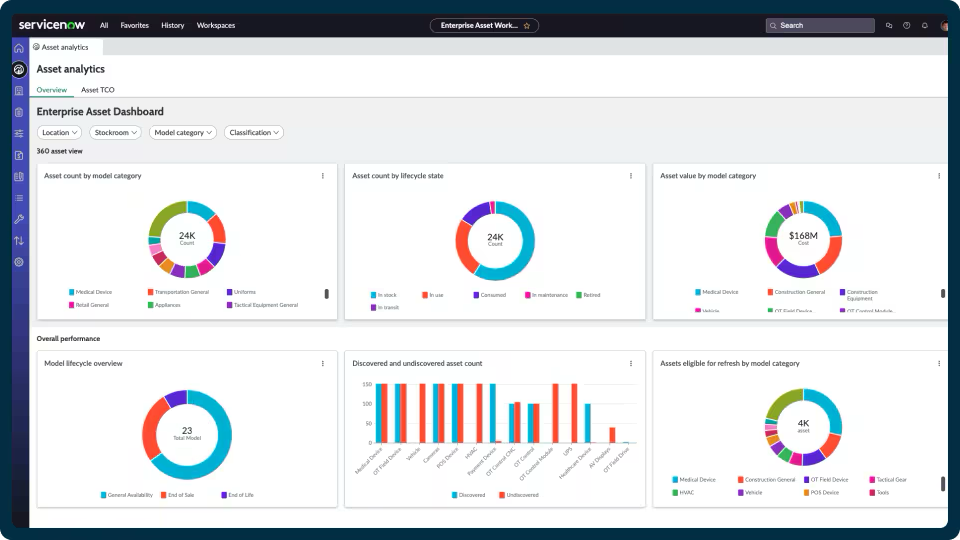
ServiceNow ITOM is a well-known enterprise platform for IT operations management. The solution covers the core ITOM disciplines: automated discovery, a mature CMDB, service mapping, and AIOps functions for event correlation and root-cause analysis. The platform is embedded in the ServiceNow ecosystem with native ITSM integration.
Strengths
- Extensive feature set with seamless integration between ITOM and ITSM modules
- Mature AIOps and CMDB capabilities for complex hybrid and multi-cloud environments
- High scalability for large, distributed IT landscapes
Limitations
- In practice, implementation often extends over several months and requires a dedicated administration team
- Full value is only realized with a cleanly maintained CMDB and corresponding internal IT expertise
- Pricing typically falls in the high five- to six-figure range per year
BMC Helix
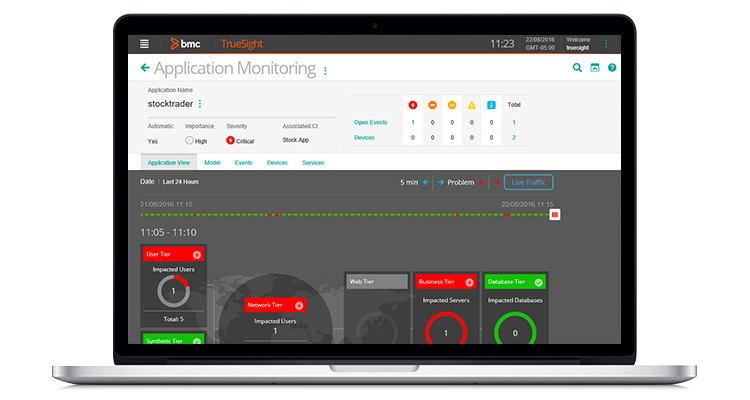
BMC Helix Operations Management is an enterprise ITOM platform with a strong AIOps focus. The solution combines observability and anomaly- and pattern-based analytics with automated root-cause analysis and remediation workflows. BMC Helix collects and correlates data from events, metrics, logs, and topology, and offers numerous third-party integrations.
Strengths
- Deep AIOps capabilities with root-cause analysis and automated recommendations
- Broad integrations, including Datadog, Dynatrace, ServiceNow, and SCOM
- Strong performance in complex hybrid and multi-cloud environments
Limitations
- Complex rollout with significant configuration effort
- Requires experienced IT staff for operation and ongoing maintenance
ManageEngine OpManager
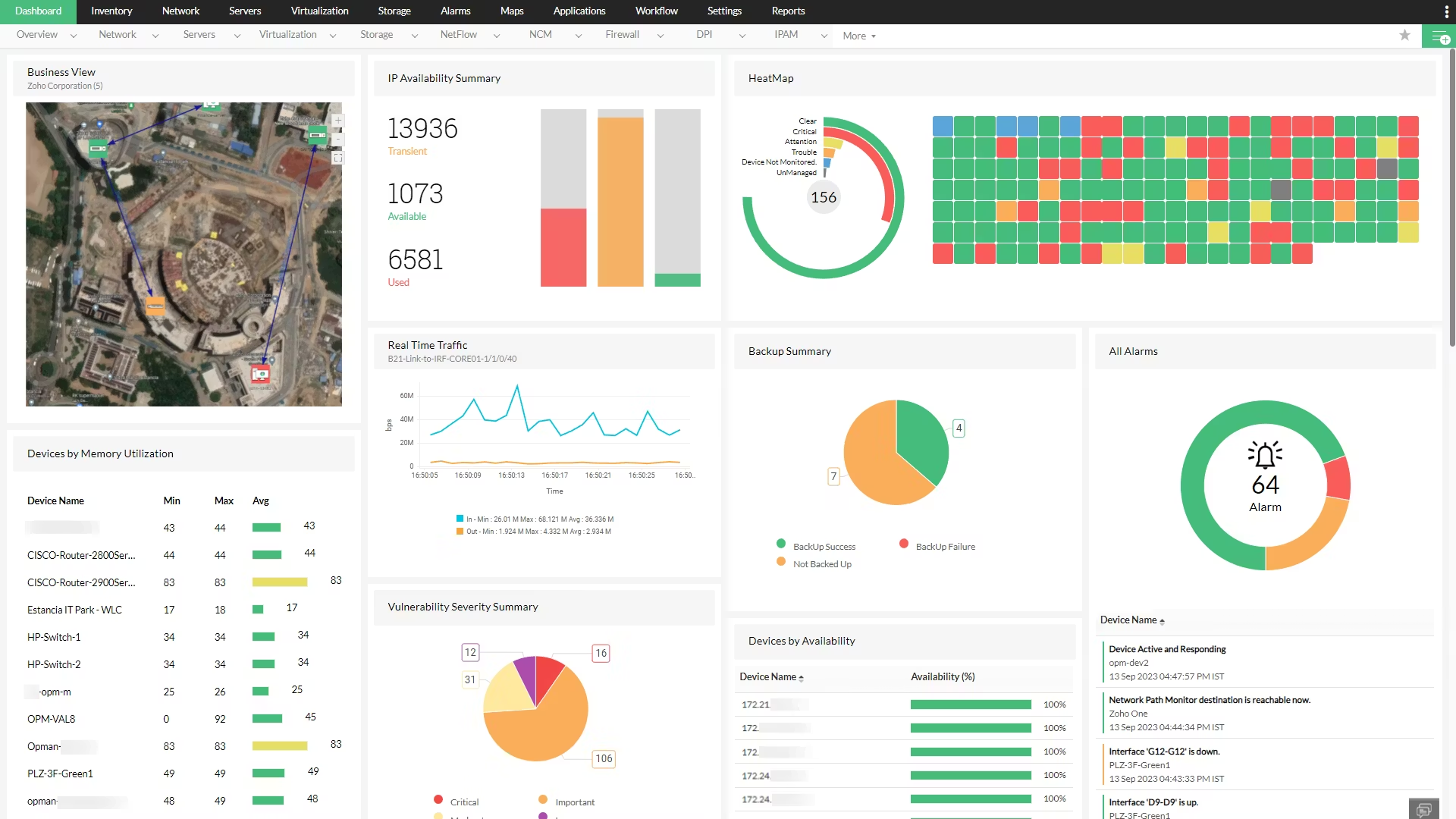
ManageEngine OpManager is an established mid-market solution for network, server, and infrastructure monitoring. The software covers classic ITOM tasks, from availability monitoring and performance analysis to alerting. Supplementary ITOM functions such as application monitoring or advanced analytics are covered through separate ManageEngine products.
Strengths
- Broad functionality for network and server monitoring
- Lower pricing compared to enterprise vendors
- Modular extensibility within the ManageEngine ecosystem
Limitations
- ITOM functions are spread across multiple individual products, which can make the overall solution harder to navigate
- Difficult to operate without at least one internal IT professional
Prometheus
Prometheus is an open-source monitoring solution typically used in combination with the visualization tool Grafana. It has established itself particularly in cloud-native and Kubernetes environments and is actively developed by a large community.

Strengths
- Free to use and open source
- High flexibility and a large community
- Standard in many Kubernetes and microservices architectures
Limitations
- Setup, data storage, and visualization require significant technical expertise
- Does not cover the full ITOM feature set
- Community-based support only, with no professional vendor backing
ITOM solutions for SMBs: when each option makes sense
Which ITOM solution fits your company depends less on headcount and more on two other factors: how much internal IT capacity is available, and how complex the existing infrastructure is. The overview below maps typical scenarios to the appropriate solution category.
The true cost of ITOM: tool vs. managed platform
What does an ITOM solution actually cost? License fees are just the tip of the iceberg. Beneath them lie further items that often only surface late in the selection process: implementation time, admin training, integration with existing systems, ongoing configuration, regular updates, and the internal effort required for daily operation.
Who takes responsibility for each of these items is the decisive difference between a traditional software license and a managed platform like deeploi. The overview below puts both models directly side by side.
.jpg)
{{cta}}
Conclusion: the right ITOM solution for a leaner IT team
Enterprise suites deliver breadth of functionality but require dedicated IT personnel. Mid-market tools are competitively priced but leave the operational burden with the customer. Open-source tools are free but demand technical expertise.
For SMBs without an internal IT department, or with IT teams that need to be freed from routine tasks, deeploi offers a distinct answer: core ITOM functions as a managed service, combined with German- and English-language support, transparent pricing, and implementation in a few days to three weeks. Onboarding and offboarding take 3 to 5 minutes instead of several hours, patching runs automatically, and the internal team can focus on work that actually creates value.
The right question, then, is not: "Which tool?" It's: "Who takes care of operations?"
FAQ
Which ITOM solution is suitable for SMBs with fewer than 200 employees?
Traditional enterprise suites like ServiceNow or BMC Helix are oversized for this scale. Mid-market tools like ManageEngine are an option when an internal admin is available. When that capacity is absent, a managed platform like deeploi makes more sense, because it delivers IT operations processes as a finished outcome, without anyone internally needing to configure tools, escalate tickets, or manually roll out updates.
How long does ITOM solution implementation take?
It depends heavily on the solution type. Enterprise suites often take 6–12 months according to market observers and require a dedicated project team. Mid-market tools fall in the range of weeks to months. Managed platforms like deeploi are typically ready to use within a few days to three weeks.
Should I run ITOM software myself or use a managed service?
Self-operation requires internal administration resources, scripting expertise, and ongoing maintenance for updates, rules, and alerts. A managed service like deeploi shifts that workload to the provider, including support and compliance, and is typically more cost-efficient and faster to deploy for companies without an IT team.