





Key Takeaways
The topic in a nutshell
- SEO onboarding is significantly more specialized than general onboarding. In addition to standard tools, new SEO team members typically need 5 to 7 additional access credentials, clearly defined permissions, and a structured handover of strategy, KPIs, and historical data.
- The most important phase is preboarding. Laptops, email accounts, communication tools, CMS access, Google Search Console, GA4, and paid SEO licenses should all be set up before the first working day to avoid losing valuable time.
- Permissions, data protection, and licensing are particularly critical, as SEO roles often involve working with analytics, tracking, and CMS data. This makes it essential to properly implement the need-to-know principle, data processing agreements (DPAs), seat licenses, and secure password-sharing processes.
- deeploi is an ideal solution for onboarding if you want to standardize SEO onboarding. It enables onboarding and offboarding in 3 to 5 minutes, deploys role-based software packages, centrally manages devices, and can reduce IT workload by up to 95%.
When onboarding new SEO team members, a generic checklist is rarely sufficient. The role is highly tool-driven, involves working with sensitive data, and requires access to multiple platforms, dashboards, and workflows from day one. This is exactly where many SMEs encounter common gaps: the laptop arrives too late, a critical tool seat is missing, or no one knows which permissions are actually required in the CMS and analytics platforms. This guide shows you how to structure the onboarding process without needing to be an SEO or IT expert.
Why SEO onboarding differs from general onboarding
New SEO hires don’t just need a working laptop and an email account. From day one, they typically work with multiple data sources, editorial processes, and technical systems simultaneously. These often include Google Search Console, GA4, a CMS, project management tools, reporting dashboards, and at least one specialized SEO suite such as Semrush or Ahrefs.
- Tool intensity: SEO is one of the roles with the highest number of SaaS tools, browser setups, and desktop applications.
- Data dependency: Without access to historical rankings, traffic data, and existing reports, there is no meaningful context.
- Cross-functional collaboration: SEO works closely with content, web development, design, and marketing teams.
- Security requirements: CMS and analytics permissions must not be granted too broadly.
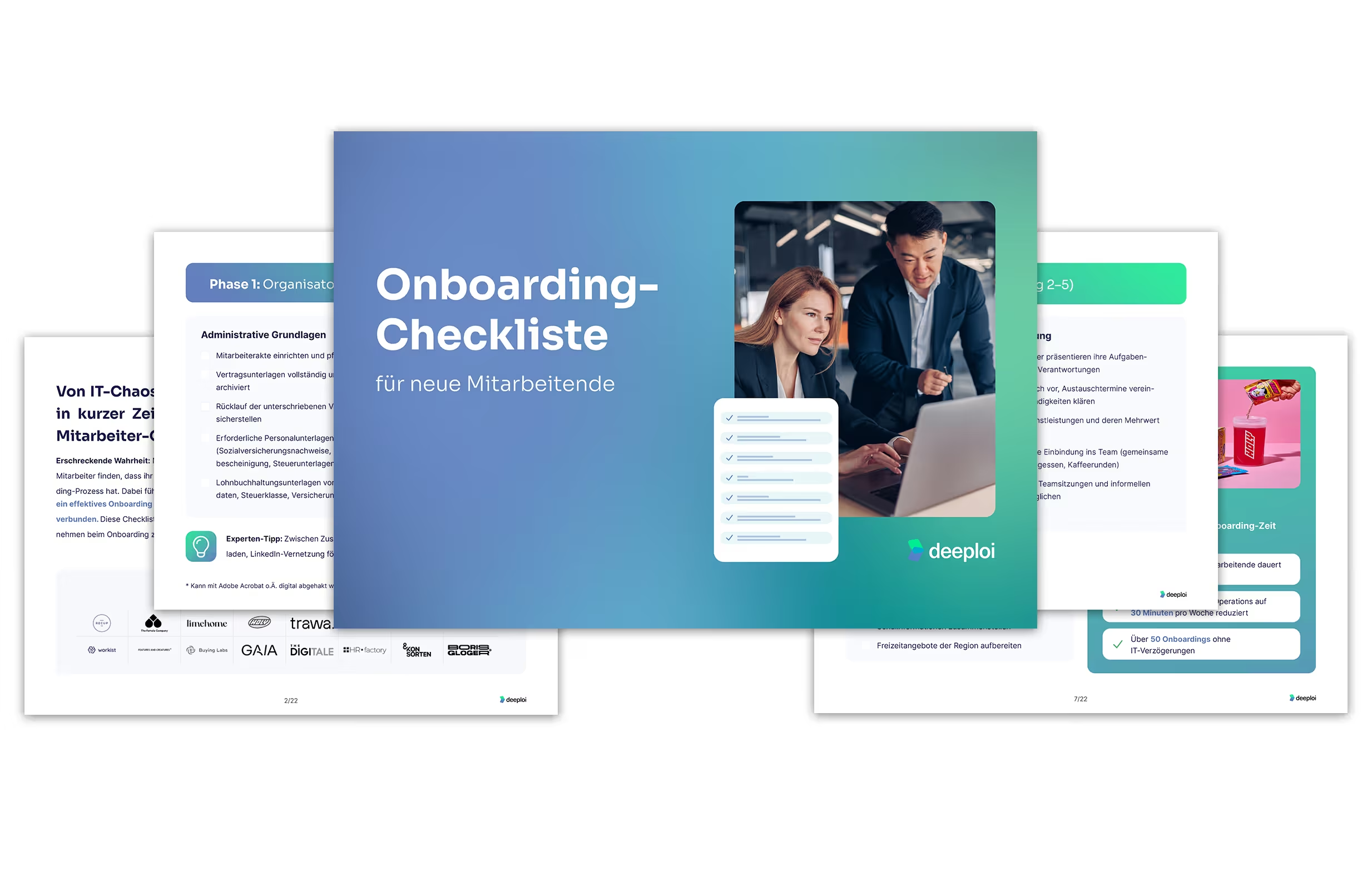
Many companies only realize this on the first working day—when something is missing. Improvised IT support via chat, email, or tickets begins, and the new hire immediately loses momentum. If you’re looking for a general foundation first, the deeploi onboarding checklist provides a broad framework. For SEO, however, you also need a role-specific plan that aligns IT, business teams, and data protection.
The SEO onboarding checklist: from preboarding to day 100
Preboarding (ideally 2–4 weeks before the start date)
- Prepare hardware: order the laptop, define the standard setup, and plan delivery or handover.
- Set up core accounts: email, calendar, Slack or Teams, video conferencing, project management tools, and knowledge base access.
- Review SEO licenses: assign seats for Semrush, Ahrefs, Surfer SEO, or other tools in advance.
- Gather key materials: SEO strategy, brand guidelines, content calendar, KPI definitions, and recent reports.
- Assign access gradually: avoid granting full admin rights by default for CMS, GSC, and GA4.
First working day
- Check devices and logins: test everything together once.
- Introduce stakeholders: marketing, content, web, product, and potentially agency partners.
- Clarify priorities: define which quick wins, audits, or content gaps to tackle first.
Weeks 1 to 4
- Understand reporting: dashboards, Looker Studio, KPI reviews.
- Take on initial tasks: content audits, keyword clustering, technical screening.
- Schedule regular check-ins: identify knowledge gaps and missing tools early.
First 100 days
- Expand responsibilities: channels, topic areas, and projects.
- Review license usage: identify what is actually needed and what is not.
- Standardize processes: turn insights into a structured SEO onboarding template.
This is exactly where deeploi Onboarding adds value: instead of manually setting up accounts, software, and devices each time, you can define role-based packages for marketing and SEO roles and deploy them consistently.
Which tools and access new SEO team members actually need
The most common question in day-to-day work is: what access does a new SEO hire really need? The short answer: more than many teams expect. Beyond standard software, SEO typically requires a mix of free Google tools, paid research platforms, content tools, and CMS permissions. What matters most is that you don’t improvise everything on the first day. Instead, define in advance which tools are essential from the start and which can be added later.
For SMEs, this isn’t just a question of tools—it’s also a process issue. When software bundles, installations, and updates are managed centrally, error rates drop significantly. This also ties into topics like software license management and patch management, because SEO desktop tools and browser extensions can quickly become chaotic.
Setting up access rights, GDPR compliance, and license management properly
SEO team members often work with data that is sensitive both legally and commercially. That’s why your onboarding shouldn’t just clarify which tools are enabled, but also which permissions are granted. A common mistake is reflexively giving admin access to all key platforms. It may seem quick, but it introduces risks in CMS, analytics, and tracking setups.
- Need-to-know principle: Grant only the permissions required for the current task.
- GA4: Viewer or Editor access is often sufficient for onboarding; Admin only for responsible personnel.
- Google Search Console: Assign Property User access selectively.
- CMS: Author or Editor is usually enough; Admin only with explicit approval.
- Data processing agreements and GDPR: Tools with personal data should have a DPA in place.
- TTDSG awareness: New team members should understand how consent and tracking are managed on your website.
- Passwords: Never share them in plain text via email or chat.
License management is also part of the picture. Seat-based tools can quickly become a cost driver if no one keeps track. On the technical side, central device management standards and a clear view of MDM structures are helpful, for example as described in the MDM software comparison article. deeploi supports this with centralized device management, policy enforcement, automated device encryption, and GDPR-compliant administration.
How SEO onboarding works in practice depending on your IT setup
The complexity of your SEO onboarding largely depends on your setup. In many companies, the responsibility falls to HR, office, or operations—people who handle IT only as a side task. This is where most friction occurs.
- Without an internal IT team: One person coordinates laptops, accounts, tool licenses, and access simultaneously. Manual effort can quickly reach 5–6 hours per hire.
- With an external IT provider: Standard IT works well, but SEO-specific tools often fall through the cracks because no one knows the specialized requirements.
- With an internal IT team: Devices and core software are structured, but specialized marketing and SEO tools are often delivered only on request.
An automated approach closes exactly this gap. With deeploi, you can define role-based software packages, deploy devices ready-to-use via zero-touch provisioning, and complete onboarding or offboarding in 3–5 minutes instead of 2–3 hours. Integration with HR systems like Personio allows the process to start automatically. For fast-growing teams, this can reduce IT effort by up to 95% and cut costs by up to 75% compared to traditional MSPs.
The 7 most common mistakes when onboarding new SEO team members
Many SEO onboarding issues aren’t technical mistakes—they’re process errors. They happen because no one has clearly defined the bridge between HR, IT, and marketing. Avoiding these common pitfalls makes the onboarding process much smoother:
- Late license checks: A tool seat is missing, and the new hire can’t work in week one.
- Unclear tool list: No one knows in advance whether GSC, GA4, CMS, crawler, and content tools are ready.
- Too many permissions: Admin access is granted for convenience, though Editor or Viewer would suffice.
- No handover of historical data: Without old reports, audits, and KPI definitions, context is missing.
- Unsafe password sharing: Credentials end up in chats or unencrypted documents.
- No standardized device setup: Browsers, extensions, desktop tools, and updates are manually collected.
- No clear responsibility: HR waits for marketing, marketing waits for IT, and in the end, no one feels responsible.
The best countermeasure is standardization. Create a fixed SEO checklist, a role-based software package, and a clear permissions matrix. This turns a one-off improvisation into a repeatable process that works even with multiple hires.
Conclusion
A good onboarding checklist for new SEO hires combines three elements: functioning IT, appropriate professional access, and structured training. Missing any one of these immediately lowers productivity in the first days. Especially in SMEs, agencies, and startups, it’s worth avoiding reinventing SEO onboarding every time.
- Before the start date, devices, accounts, licenses, and permissions should be clarified.
- On day one, all accesses should work, and priorities should be clear.
- In the first weeks, the new hire needs context, historical data, and regular check-ins.
If you want to make this process scalable, deeploi is a powerful all-in-one solution. It automates onboarding and offboarding, centrally manages devices, deploys role-based software packages, and supports teams with an average support response time of 12 minutes—especially helpful when IT is only a secondary responsibility.
Contact deeploi for SEO onboarding now
FAQ
Which tools does a new SEO hire need at minimum?
At minimum, email, calendar, communication tools, project management, CMS access, Google Search Console, and GA4 should be prepared. Many teams also add 1–3 specialized SEO tools like Semrush, Ahrefs, or Screaming Frog.
What should I do first when someone is about to start in SEO?
Start with a simple list covering hardware, core accounts, SEO tools, CMS permissions, and key documents. Then check which licenses are still missing and who needs to grant access. This first step in structuring saves the most time later.
How long until new SEO hires are productive?
It depends on the role and company maturity. First operational tasks are often possible within the first days, but full effectiveness usually takes 4–6 months to understand strategy, data history, and internal processes.
How long until new SEO hires are productive?
Assign permissions gradually. Viewer or Editor rights are enough for onboarding in many tools, while Admin access should go only to clearly responsible personnel. This keeps you secure and avoids unnecessary access.
Can I automate IT onboarding for SEO roles?
Yes—especially the IT part. With deeploi, you can centrally prepare devices, standard software, and role-based packages for marketing or SEO roles and deploy them in 3–5 minutes. This is particularly useful if you have multiple hires per year or don’t want to build an internal IT team.

.jpg)
.png)