



Direct Answer
The best MDM software depends on your operating systems, company size, IT expertise, and required features – with ease of use, automation, scalability, and reliable support being key. For SMBs without an in-house IT team, deeploi offers an all-in-one solution that combines MDM with onboarding, software management, IT support, and cybersecurity.
Key Takeaways
- MDM has become essential: Without Mobile Device Management, companies face security risks and inefficient processes. The number of mobile devices in organizations continues to rise – smartphones and laptops are now a core part of the IT infrastructure. At the same time, cyberattacks on mobile devices are increasing, making Mobile Device Management solutions indispensable.
- The right solution reduces up to 95% of IT workload: With automated Mobile Device Management, you can reduce the onboarding process from 3 hours to 3–5 minutes. Manual configuration, app management, and security updates run automatically. This gives your team more time for strategic tasks.
- Not all MDM solutions are the same: Pure MDM tools focus on device management and configuration of mobile endpoints. All-in-one platforms go further and integrate additional features. The choice depends on your company size, existing IT expertise, and specific requirements.
- deeploi goes beyond classic MDM: As a comprehensive IT solution, deeploi combines Mobile Device Management with automated onboarding, unlimited IT support, cybersecurity, and software deployment. Ideal for companies without their own IT department – you don’t need technical expertise and you can save up to 75% in costs compared to traditional IT service providers.
How do you manage 50, 100, or even more smartphones and tablets when some team members work remotely, new employees join all the time, and no one really has time for IT topics? Mobile Device Management (MDM) promises the solution – but which software actually fits your company?
What is MDM (Mobile Device Management)?
Mobile Device Management (MDM) is a software solution that enables companies to centrally manage, configure, and secure mobile devices such as smartphones, tablets, and laptops. MDM software forms the foundation of modern IT infrastructure and helps organizations efficiently control their mobile devices – regardless of where employees are located.
Main functions of MDM
- Device configuration: Automatic setup of devices with company policies so new smartphones or laptops are ready to use immediately. Configuration also includes all required apps, workspaces, and security settings.
- App management: Central installation, updating, and removal of applications on all managed devices. You define which apps are available and can block unwanted programs.
- Security policies: Enforcement of password requirements, encryption of sensitive data, and remote wipe in case of loss or theft. MDM solutions protect your company data.
- Remote management: Remote access for IT support and troubleshooting without physical access to the device. Issues can be resolved from a distance, saving time and increasing productivity.
- Compliance monitoring: Ensuring that all devices meet company standards, have the latest security updates installed, and comply with internal and external requirements.
The difference between MDM and Unified Endpoint Management (UEM): While MDM focuses solely on mobile devices, UEM goes one step further. UEM additionally manages desktops, servers, and IoT devices on a single platform. MDM is often a subset of UEM solutions.
The most important selection criteria for MDM software
Choosing the right MDM software depends on several factors – not every solution fits every company. While large enterprises with their own IT departments need complex enterprise-level tools, SMEs and startups often require simple, intuitive solutions that work without technical expertise.
Guidance for decision-makers – key criteria
- Operating system support: Check which platforms the MDM software supports – iOS, Android, Windows, macOS, or Chrome OS. Some tools specialize in Apple devices, others cover multiple operating systems. Make sure all devices you use can be managed.
- Feature set: Differentiate between core features like device management and app deployment and advanced capabilities like zero-touch enrollment. Consider what you truly need.
- Scalability: Does the MDM solution grow with your company? Can it manage 10, 100, or 1,000+ devices without performance or usability issues? Flexible licensing models allow you to adapt the system as you scale.
- Integration: Can the MDM tool connect with your existing systems? Seamless integration with HR tools like Personio and software deployment solutions saves time and significantly reduces manual work.
- Support & service: How quickly does IT support respond when issues arise? Is there support in your time zone, possibly in German? Example: deeploi offers an average response time of 12 minutes – significantly faster than the industry standard.
- User-friendliness: Is the MDM software usable for people without strong IT expertise? So-called “accidental IT owners” – HR managers or founders – must be able to use the tool without technical knowledge. An intuitive interface is what separates efficiency from frustration.
The 11 best MDM solutions in detail
Now that you know the key selection criteria, let’s take a look at the leading MDM solutions on the market. Each tool has its strengths and is designed for different types of companies – from pure Apple specialists to comprehensive all-in-one platforms.
1. deeploi – The all-in-one IT management platform
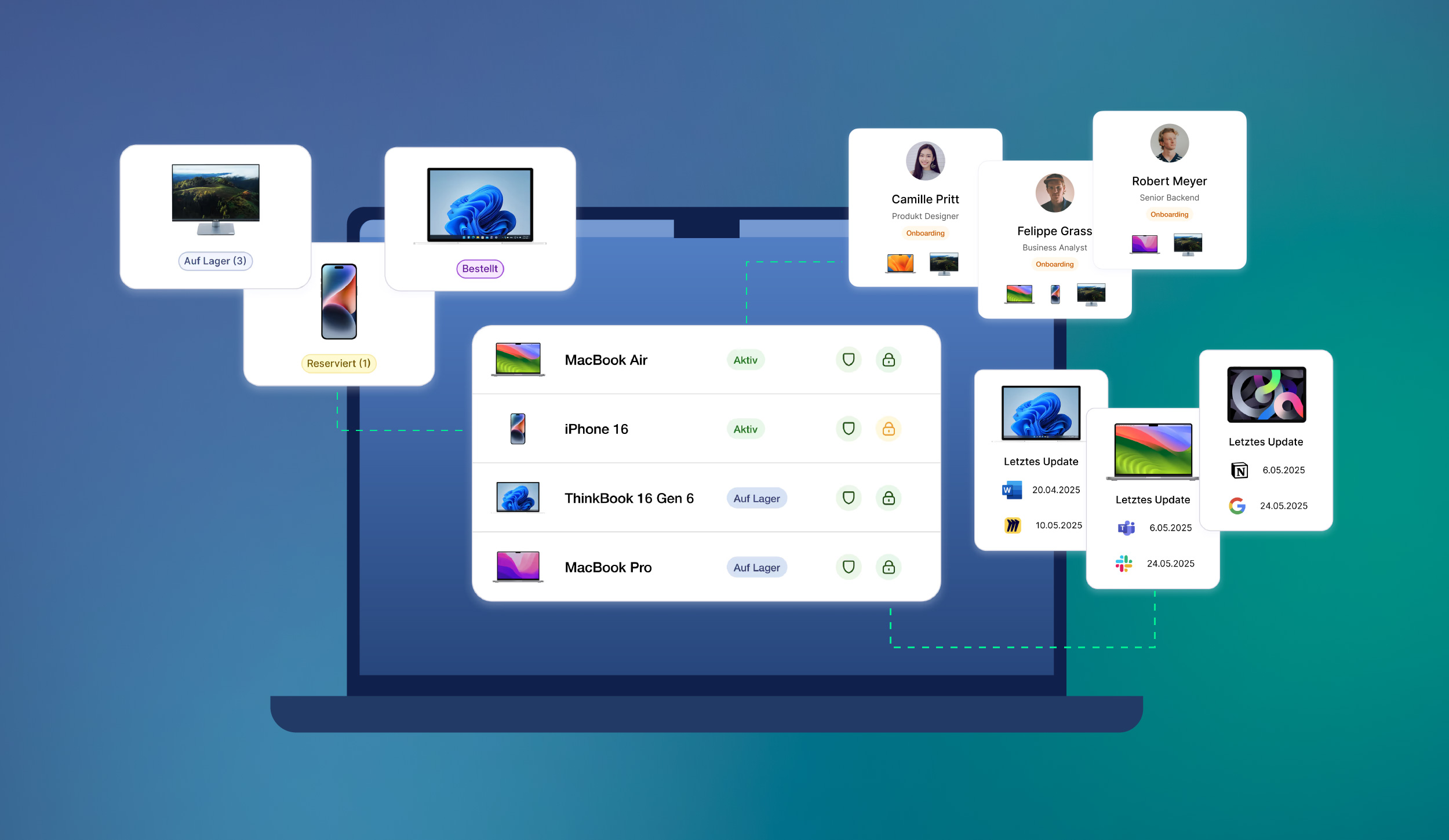
deeploi is more than just mobile device management software – it is a complete IT management platform that covers all aspects of IT administration. Ideal for companies without an internal IT department. The solution combines MDM features with automated onboarding, unlimited support, and cybersecurity on a single platform.
Core features:
- Mobile Device Management: Centralized management of all smartphones and tablets with automated configuration and security policies
- Automated onboarding and offboarding: Integration with HR systems like Personio for seamless processes from hiring to departure
- Software management and app deployment: Automatic installation and updates of all required applications across all devices
- IT support with a 12-minute response time: Unlimited support from German-speaking experts with an average response time of 12 minutes
- Cybersecurity and compliance management: Automated security updates, patch management, and GDPR-compliant data handling
USPs – Why deeploi stands out:
- Reduction of IT workload by up to 95%: Automation eliminates repetitive tasks and frees your team for strategic projects
- Onboarding in 3–5 minutes instead of 3+ hours: New employees receive ready-to-use devices with all apps and access rights instantly
- Designed specifically for “accidental IT owners”: No IT expertise required – HR managers or founders can easily use the platform
- Combination of platform and human support: You don’t just get software – you get an IT partner who proactively thinks ahead and anticipates issues
- Transparent cost structure: Up to 75% more affordable than traditional MSPs with no hidden fees or unexpected invoices
- German platform with local support: ISO 27001–certified, GDPR-compliant, with support available in German and English during your business hours
Best suited for: Startups, agencies, consultancies, and fast-growing SMEs without their own IT department. Particularly valuable for companies aiming to standardize and automate IT processes without investing in expensive IT resources.
2. NinjaOne
NinjaOne is a comprehensive endpoint management solution with strong MDM capabilities. The platform enables management of Android and Apple mobile devices alongside Windows, macOS, and Linux endpoints – all through a single console. NinjaOne positions itself as an RMM (Remote Monitoring and Management) solution with integrated Mobile Device Management.
Key features:
- Inventory overview with real-time insights into hardware, software, and security status
- Policy management for consistent configuration across all endpoints
- Remote access and troubleshooting for fast support
- App deployment and management with automated updates and patching
Strengths:
- Very high customer ratings (4.8/5 on G2 and Capterra)
- Intuitive user interface
- Excellent customer support with fast response times
- More than 5 million protected endpoints worldwide
Weaknesses:
- Focus is on RMM – MDM is only one component of the platform
- May be oversized for companies needing only pure MDM and may introduce unnecessary complexity
- Pricing structure is not always transparent, which can complicate budget planning
Best suited for: Companies looking for a comprehensive endpoint management solution beyond mobile device management. A strong fit for MSPs and IT teams with technical expertise who want to manage all endpoints from one platform.
3. Microsoft Intune
Microsoft Intune is part of the Microsoft 365 suite and offers comprehensive Mobile Device Management as well as Mobile Application Management (MAM). The solution integrates seamlessly into existing Microsoft infrastructures and is ideal for companies already operating within the Microsoft ecosystem. Intune enables the management of iOS, Android, Windows, and macOS through a single platform.
Key features:
- Management of iOS, Android, Windows, and macOS with cross-platform policies
- Integration with Azure Active Directory for identity and access management
- Conditional access policies to control access to company data
- App protection policies without requiring full device enrollment
Strengths:
- Seamless integration with Microsoft 365 environments
- Extensive functionality for Windows devices with deep OS-level integration
- Strong security and compliance features
Weaknesses:
- High complexity with a steep learning curve – onboarding can take weeks
- Requires dedicated IT expertise for configuration and ongoing administration
- Can be overwhelming for smaller companies without an IT team
Best suited for: Medium to large organizations with an internal IT department and an existing Microsoft infrastructure. Less suitable for SMEs without IT resources or companies looking for a simple, quickly deployable solution.
4. Jamf
Jamf is the market leader for Apple device management and specializes exclusively in macOS, iOS, iPadOS, and tvOS. The solution is considered the standard for Apple-focused companies and offers the deepest integration with the Apple ecosystem. Jamf is designed specifically for managing Apple devices and makes optimal use of native Apple capabilities.
Key features:
- Zero-touch deployment for Apple devices with automatic configuration
- Comprehensive Apple-specific management leveraging full native OS functionality
- Self-service portal enabling employees to install apps and resolve issues on their own
- Automated Device Enrollment (ADE) for seamless onboarding of new Apple devices
Strengths:
- Excellent solution for pure Apple environments with deep Apple-specific features
- Strong integration with the Apple ecosystem
- User-friendly for Apple device management
Weaknesses:
- No support for Android or Windows – mixed environments require additional tools
- Relatively high cost compared to cross-platform alternatives
- Only worthwhile with a large share of Apple devices – oversized for companies with just a few Apple endpoints
Best suited for: Companies that exclusively use Apple devices. Particularly popular with creative agencies, design studios, media companies, and tech startups with an Apple-first strategy.
5. ManageEngine Mobile Device Manager Plus
ManageEngine offers a comprehensive MDM solution supporting Android, iOS, Windows, macOS, and Chrome OS. The platform targets companies seeking a feature-rich, cost-effective solution. ManageEngine positions itself as an affordable alternative to expensive enterprise tools, offering a broad feature set for mixed device environments.
Key features:
- Cross-platform device management for all common operating systems
- App management and distribution with automated updates
- Kiosk mode for mobile devices
- Geofencing and real-time location tracking
Strengths:
- Good price-performance ratio
- Broad platform support enables management of various mobile devices without additional tools
- Many features available out of the box
- On-premise and cloud deployment options
Weaknesses:
- User interface can feel somewhat outdated compared to newer competitors
- Support quality varies by region and can be slow for complex issues
- Setup can be complex and requires some IT expertise
Best suited for: Medium-sized companies with an IT department seeking an affordable MDM solution with many features. Well suited for mixed device environments with multiple operating systems and a limited budget for device management.
6. IBM Security MaaS360
IBM Security MaaS360 is an established UEM solution with a strong focus on security and compliance. The platform uses AI-driven analytics for threat detection and offers comprehensive management of iOS, iPadOS, macOS, Android, Windows, and ChromeOS. MaaS360 is designed for companies with high security requirements and complex compliance obligations.
Key features:
- Continuous threat protection with ongoing monitoring of all mobile devices
- AI-driven security analytics
- Integration with business applications for seamless connectivity to internal systems
- Automated patch management
Strengths:
- Strong security features with AI-powered threat detection
- Extensive compliance support for regulated industries, including detailed reporting
- Good integration with the IBM ecosystem
Weaknesses:
- Relatively low user ratings (4.1/5 on G2)
- Complex setup and administration require dedicated IT expertise and longer implementation times
- Higher cost than many competitors with a less intuitive user interface
- User interface is not particularly user-friendly – steep learning curve for new users
Best suited for: Large organizations with high security and compliance requirements. Ideal for regulated sectors such as financial services, healthcare, or government institutions that require detailed audit trails and compliance documentation.
7. Miradore
Miradore is a cloud-based UEM solution known for its simplicity and free basic version. The platform supports Android, iOS, Windows, and macOS and is designed for small to medium-sized businesses looking for a straightforward mobile device management solution. Miradore positions itself as an accessible alternative to more complex enterprise tools.
Key features:
- Basic MDM for all major platforms with centralized management of smartphones, tablets, and laptops
- Automated endpoint tasks to reduce manual workload
- Data encryption and remote wipe
- Centralized device configurations that can be deployed across all endpoints
Strengths:
- Free version for up to 50 devices
- Simple, user-friendly interface
- Fast implementation – ready to use within a few hours without complex setup
- Good price-performance ratio, even in paid versions
Weaknesses:
- Limited feature set in the free version – advanced features only available in premium plans
- Fewer advanced capabilities compared to competitors like NinjaOne or deeploi
- Support can be slow, especially for free accounts without priority service
Best suited for: Small businesses and startups with limited budgets and simple MDM needs. Ideal for organizations with up to around 50 devices that require basic device management without complex scenarios.
8. Hexnode UEM
Hexnode is a modern UEM solution offering comprehensive MDM functionality with broad platform support. The software manages Android, iOS, Windows, macOS, tvOS, and Chrome OS via a unified console. Hexnode targets mid-sized companies looking for a feature-rich solution with good support without having to invest in expensive enterprise systems.
Key features:
- Comprehensive device management for all major operating systems with unified control
- Kiosk mode and digital signage for dedicated devices in retail, hospitality, or production environments
- Geofencing and real-time location tracking
- Expense management for mobile devices
Strengths:
- Very strong ratings (4.6/5 on G2, 4.7/5 on Capterra)
- Broad feature set covering most device management needs
- Reliable customer support with fast response times and knowledgeable assistance
- Competitive pricing compared to similarly feature-rich solutions
Weaknesses::
- May be oversized for very small teams – simpler solutions may suffice
- Some advanced features require higher-tier plans, increasing costs as requirements grow
- Learning curve for full functionality – effective use requires onboarding and some IT expertise
Best suited for: Mid-sized companies that want a feature-rich MDM tool with strong support. Particularly suitable for mixed device environments with multiple operating systems and specific needs such as kiosk modes or location tracking.
9. Kandji
Kandji is a modern Apple device management platform focused on automation and security. The solution is designed specifically for macOS, iOS, and iPadOS and offers deep integration with the Apple ecosystem. Kandji positions itself as a user-friendly alternative to Jamf with a strong emphasis on automated compliance and security monitoring.
Key features:
- Zero-touch deployment for Apple devices
- Automated compliance monitoring
- Endpoint Detection and Response (EDR) for proactive threat detection
- Self-service portal allowing employees to install apps and troubleshoot issues independently
Strengths:
- Very high user ratings (4.7/5 on G2, 4.9/5 on Capterra)
- Modern, intuitive interface that simplifies Apple device management
- Strong automation features that reduce manual effort
- Excellent support with fast response times and expert assistance for Apple-specific issues
Weaknesses:
- Available only for Apple devices – no support for Android, Windows, or other platforms
- Higher pricing than cross-platform competitors with similar functionality
- Not suitable for mixed environments – heterogeneous IT setups require additional tools
Best suited for: Companies with a pure Apple infrastructure that value usability and automation. Especially attractive for fast-growing startups and agencies looking for a modern alternative to Jamf and who do not need to manage multiple operating systems.
10. baramundi
baramundi is a German Unified Endpoint Management solution with a strong MDM module for enterprise mobility management. The platform provides extensive features for Android, iOS, Windows, and macOS, with a particular focus on data protection and compliance. baramundi is aimed at companies in the DACH region that value local support and GDPR-compliant data handling.
Key features:
- Enterprise Mobility Management (EMM) with centralized management of all mobile devices
- Native container support for Android Work Profile and iOS User Enrollment
- Cross-platform configuration enabling consistent policies across different operating systems
- GDPR-compliant data management with strict privacy standards
Strengths:
- German provider with local support in German
- ISO 27001–certified
- Strong focus on data protection and compliance makes it ideal for regulated industries
- Good integration with existing IT infrastructures through flexible interfaces and customization options
Weaknesses:
- Higher complexity requiring IT expertise – less suitable for companies without a dedicated IT department
- Pricing is on the higher end compared to cloud-first alternatives
Best suited for: Medium to large German companies with an IT department that value data protection, local support, and deep integration into existing systems. Particularly relevant for organizations with strict compliance requirements and on-premise preferences.
11. Sophos Mobile
Sophos Mobile is a UEM solution with a strong focus on security and threat detection. The platform integrates into the broader Sophos security ecosystem and offers advanced capabilities for companies that want to combine mobile device management with extensive cybersecurity. Sophos Mobile manages Android, iOS, Windows, macOS, and Chrome OS with a special emphasis on endpoint protection.
Hauptfunktionen:
- Management of Android, iOS, Windows, macOS, and Chrome OS via a unified console
- Integration with Sophos Endpoint Protection
- Container technology for BYOD scenarios
- Advanced threat detection with real-time monitoring and automated incident response
Strengths:
- Excellent security features with deep integration into the Sophos security architecture
- Strong ecosystem integration enabling unified endpoint security management
- High ratings (4.7/5 on Capterra)
- Unified security approach combining MDM with comprehensive cybersecurity on one platform
Weaknesses:
- Fewer reviews than larger competitors
- Works best when combined with other Sophos products – full functionality often requires additional licenses
- May be too extensive for businesses seeking only basic MDM without advanced security features
Best suited for: Companies already using Sophos security products or those that prefer a security-first approach to managing mobile devices. Particularly relevant for organizations with high requirements for endpoint protection and threat defense.
Why deeploi might be the right choice for you
Most companies need more than device management. They need a complete IT solution that runs smoothly and covers the entire lifecycle of their IT infrastructure.
Isolated MDM tools often lead to fragmented processes. Separate solutions for onboarding, software management, support, and security result in more complexity, higher costs, and significantly more time spent. What many companies really need is an integrated approach that seamlessly connects all IT components.
deeploi advantages in detail
- All-in-one approach: MDM + onboarding + software management + IT support + cybersecurity – all from one provider. One point of contact, one platform, one login. Instead of fragmented processes, you get end-to-end workflows from procurement to offboarding.
- Designed specifically for “accidental IT owners”: You don’t need to be an IT expert. The platform is intuitive enough for HR managers or founders to use without difficulty. Complex IT tasks become automated and simplified.
- Transparent cost structure: Up to 75% more affordable than traditional MSPs. No hidden fees, no unexpected invoices.
- German platform with local support: GDPR-compliant, ISO 27001–certified, with support in German and English and an average response time of 12 minutes.
- Integration with existing systems: Seamless connection to HR tools like Personio. Automated workflows from hiring to departure ensure new employees are productive from day one.
- Hybrid model: A combination of modern technology and human support. You don’t just get software – you get a team that anticipates issues and solves problems proactively. No do-it-yourself manuals, but real hands-on support.
Real customer success stories show the impact: The Female Company reduced its IT workload by 97%, and HOLY Energy now completes employee onboarding in just five minutes.
.jpg)
Let’s explore together how deeploi can transform your IT. Book a demo and experience how effortless professional IT administration can be.
Conclusion: Finding the right MDM solution
Choosing the right Mobile Device Management software is not a one-size-fits-all decision. Every company has different requirements, resources, and goals. What works for a large enterprise with a dedicated IT department may be completely unsuitable for a fast-growing startup. The key is understanding your specific needs and choosing a solution that grows with your business.
Key takeaways from the comparison
- Pure MDM tools cover only part of your IT needs: Device management is important, but without integration into onboarding, software deployment, and support, your processes develop gaps.
- Complexity and learning curves vary significantly: While Microsoft Intune or IBM MaaS360 offer extensive features, they require substantial IT expertise. Simpler solutions like deeploi or Miradore are often faster to implement.
- Support quality and response times matter: When IT issues arise, every minute counts. An average response time of 12 minutes, like at deeploi, makes a noticeable difference compared to the days-long waiting times typical with traditional providers.
- Integration with existing systems saves time and effort: Seamless connections to HR tools, software management, and backup solutions eliminate manual work and significantly reduce the risk of errors.
MDM alone is not enough – a holistic IT approach is essential. Fragmented solutions create inefficiencies, higher costs, and more complexity. You juggle multiple platforms, various points of contact, and countless logins. An integrated approach that connects all IT components is more successful and cost-efficient in the long run.
The best solution depends on your requirements
- Company size: Smaller teams with 20–50 employees need different solutions than enterprises with thousands of devices. Scalability is key.
- IT expertise: Do you have an IT team or are you an “accidental IT owner”? Complex enterprise tools quickly become overwhelming without technical know-how.
- Device environment: Apple-only, Android-only, or mixed? Specialized tools like Jamf or Kandji work best for pure Apple fleets, while cross-platform tools are ideal for heterogeneous infrastructures.
- Budget: What can you invest – and what do you want to invest? Transparent pricing without hidden costs is essential for reliable planning.
For SMEs without a dedicated IT department, deeploi is an optimal choice. The combination of simplicity, automation, and human support in a single solution eliminates IT headaches. Fast implementation without technical expertise, a scalable cost structure, and a team that thinks ahead – deeploi grows with your business and adapts to your evolving needs.
Ready to modernize your IT? Schedule a no-obligation call with our team and experience how simple professional IT management can be.
FAQ
What is MDM (Mobile Device Management)?
MDM is a software solution for centrally managing, configuring, and securing mobile devices such as smartphones and tablets. It includes functions like app deployment, security policies, remote wipe, and compliance monitoring.
How do I choose the right MDM solution for my company?
Consider the following factors:
- Supported operating systems
- Your company size and the scalability of the MDM software
- The existing IT expertise in your organization
- Integration options with existing systems
- Budget and pricing structure
- Quality of support offered by the MDM software
For companies without an IT department, an all-in-one solution like deeploi is recommended, as it is easy to use and provides comprehensive support.
Which MDM software is best for small and medium-sized businesses?
For SMEs, solutions that are easy to use and do not require IT experts are particularly suitable. deeploi is ideal for companies without an internal IT department because it combines MDM with onboarding, support, and cybersecurity. Alternatively, Miradore (for very small teams) or Hexnode UEM (for mid-sized companies with some IT expertise) can also be good options.
Can an MDM solution also manage laptops and desktop PCs?
Yes, many modern MDM solutions have evolved into Unified Endpoint Management (UEM) platforms and can manage laptops and desktops as well. Solutions like deeploi, NinjaOne, Microsoft Intune, and baramundi offer comprehensive management of all endpoints – mobile and stationary – on a single platform. This significantly simplifies IT administration.
What's the difference between MDM for Apple and Windows?
Apple uses Apple Business Manager (ABM) as the central anchor point for Zero-Touch Provisioning and MDM enrollment — devices can be automatically configured on first boot. Windows uses Microsoft Intune or Group Policy for similar functions, but typically requires Windows Pro or Enterprise (not Home). For mixed environments, a cross-platform solution like deeploi is recommended, managing both operating systems from one central console — noting that Zero-Touch Provisioning at deeploi is currently available for macOS devices only.